
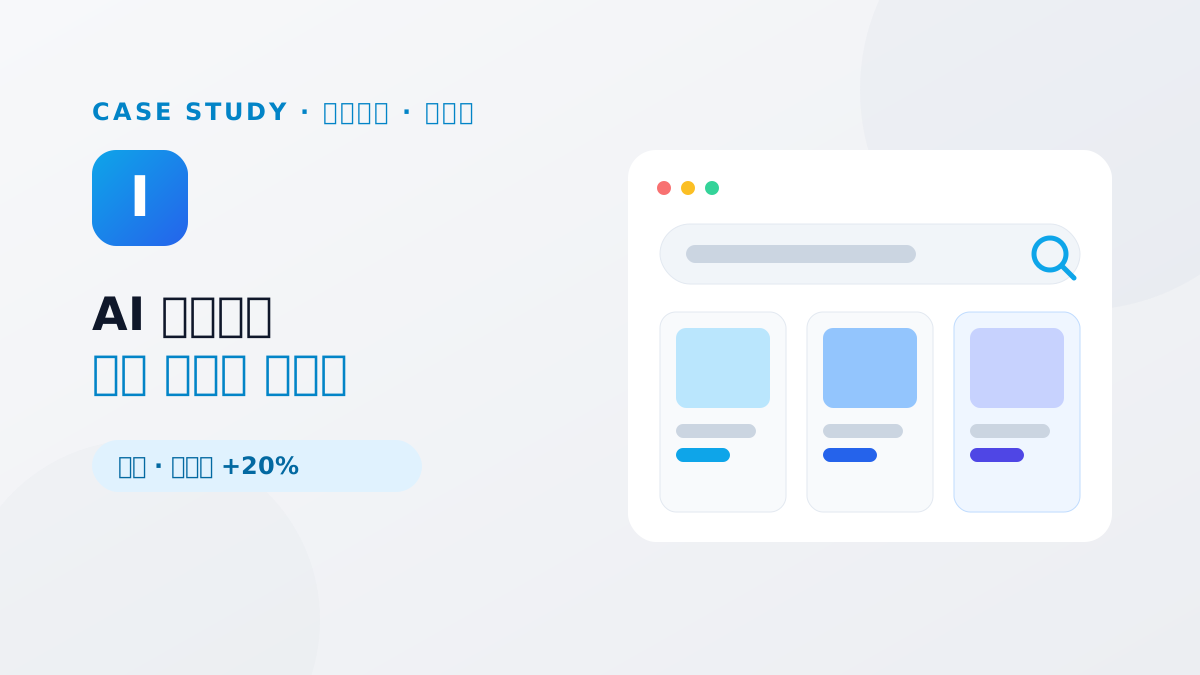
Company I, an e-commerce and media business in educational content and consumer goods, saw revenue and transaction value rise roughly 20% month over month after launch, with site traffic up about 20% following its adoption of the XGEN Agentic AI Platform. It came from tying three problems that looked unrelated — search, customer support, and site improvement — into a single AI system.
Three problems, one root
On the surface, what Company I brought us split three ways.
- When prospective customers searched for a product, inaccurate results or omissions kept the search from turning into a purchase
- Customer inquiries kept accumulating and there were not enough people to answer them
- Internal development capacity was limited, so site code improvements moved slowly
Treated separately, those belong to the search team, the CS team, and the development team. But looking at them on the floor, the root was one thing — the company could not understand customer intent in time, and could not push that understanding back into the service quickly. So we designed the three not as three tools but as one AI operating system sharing the same data.
What XGEN proposed
An AI search engine — it reads natural language as sentences and questions, not keywords. Type the way a person speaks, like "gift ideas for Children's Day," and it works out context and intent to return results, using natural-language processing to build a ranking you can trust. Search is the point in e-commerce closest to revenue, so an improvement there showed up in the numbers immediately.
AI customer-support analysis — it analyzes the shape of inquiries against accumulated customer data and produces tailored answers. Because it also suggests how to respond and what a good answer looks like, a new agent can follow a veteran's flow. It turns CS from something you process into an asset that learns.
An AI code assistant — it understands the site structure and its administrative information, and writes code that reflects intent on its own. Improvements that fit the site's structure no longer require an internal developer to hand-write them, so limited development capacity stops being the bottleneck. It also doubles as training material for new developers.
What stayed was the flow, not the numbers
The most visible change was of course the numbers. Revenue and transaction value rose roughly 20% month over month after launch, and traffic rose about 20%, on a stable operating footing. The rise in search quality itself — through AI search and refine-within-results — mattered a great deal.
What we found more meaningful, though, was that the way the teams worked changed. Once search, CS, and development began sharing the same understanding of the customer, improvement got faster. They had not bought three tools; three teams had started speaking the same language.
If your team is facing the same thing
Missed search results, a flood of inquiries, and slow improvement usually arrive separately — but the root is often shared. If you want to tie those three into one system the way Company I did, you can start with the approach in Applied AI solutions and PoC Projects.
- AI turning retail trends into reports → Home-shopping retailer L's insight reporter
- RAG that handles multimodal data → Company S's multimodal RAG Editor
If you are considering adoption, leave us the problem at PoC and technical consultation. Someone will get back to you within one to two business days.